Ukraine War Momentum Helps Spur Interest in Postwar Investment
· NY Times

· NY Times
· Fortune
Visit somethingsdifferent.biz for more information.
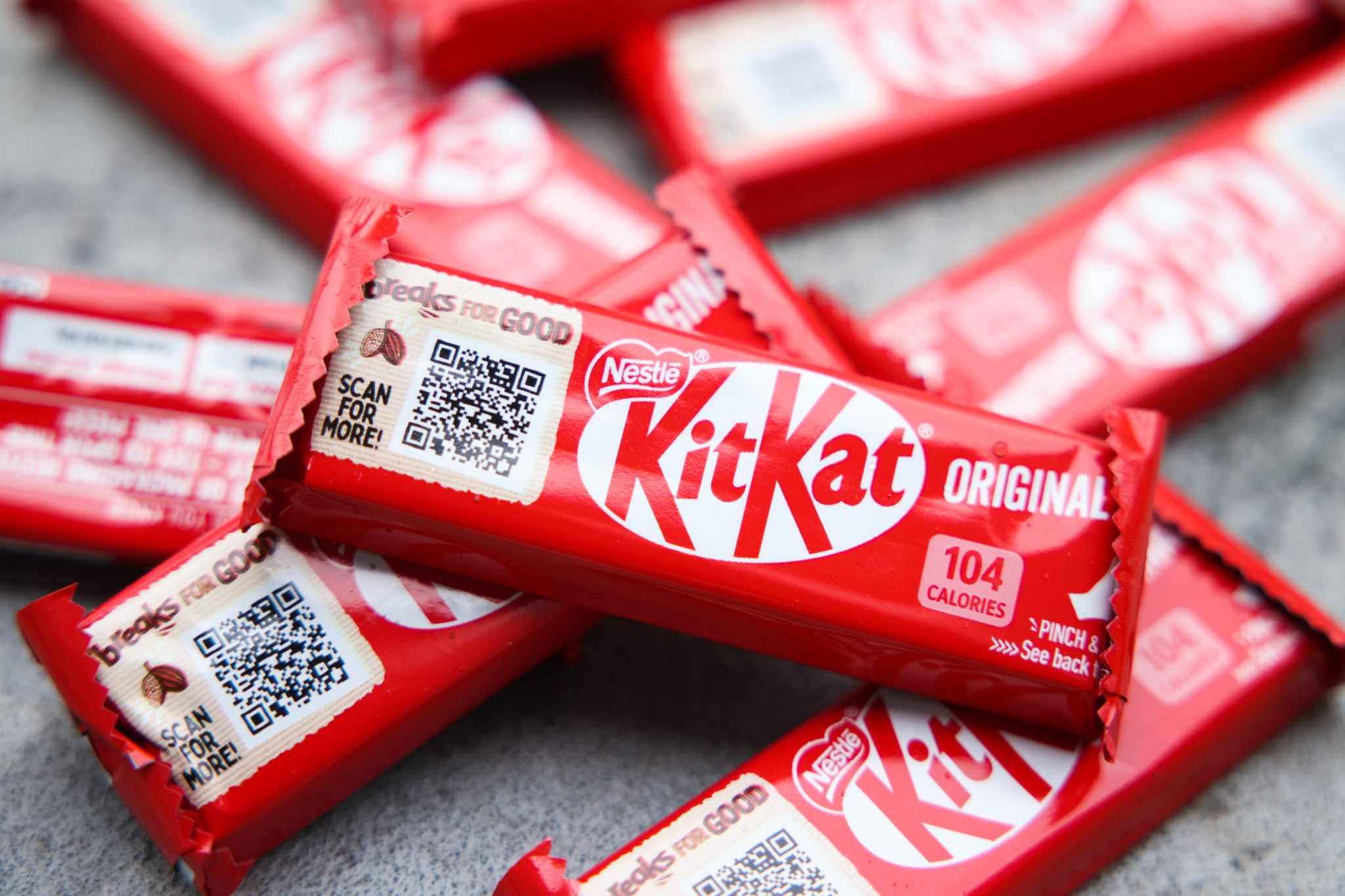
On a Monday morning in late March, a member of Nestlé’s marketing team walked into the company’s office in Vevey, Switzerland with unusual and costly news. More than 400,000 KitKat bars, some 12 tons of chocolate, had vanished while being transported from a Nestlé factory in central Italy to its destination in Poland, after thieves made off with the truck. It was days before Easter, one of the busiest times of the year for the chocolate-maker.
For a few hours, the disappearance was fodder for office jokes, Mélanie Brinbaum, Nestlé’s European head of marketing and consumer communications, tells Fortune. But over the course of the day, an idea took root: What if, instead of staying quiet about the theft or issuing a defensive statement, Nestlé leaned into the absurdity of the situation? “A colleague on my team half in jest, wondered aloud whether the story should be made public,” Brinbaum says.
The team floated the idea to Nestlé’s global KitKat brand group, then gave its agency partner, VML, 24 hours to return with a concept. The tight deadline was necessary given how quickly the story was already spreading online, Brinbaum says: “We needed to be super reactive, otherwise we’d miss the moment.”
Nestlé confirmed publicly that a shipment had disappeared in transit. “We’ve always encouraged people to have a break with KitKat,” Nestlé’s statement on X read. “But it seems thieves have taken the message too literally and made a break with more than 12 tons of our chocolate.” The post drew 393,000 likes overnight—the highest total in the account’s history.
Fortunately, no one was hurt during the KitKat heist. However, cargo hijackings are becoming a growing issue for companies and their supply chain partners. Europe recorded 30,543 cargo crime incidents between 2024 and 2025, with documented losses reaching €860.5 million ($991.5 million), analysis from the Transported Asset Protection Association shows.
Birnbaum says part of its reason for going public with the KitKat theft was to draw attention to the escalating issue. “This is not the first time” Nestlé has faced an incident like this, she adds.
Nestlé and VML developed a stolen KitKat “tracker” that let people scan the eight-digit batch code on their KitKat wrapper to check whether it was originally in the missing shipment. More than 2.2 million people clicked on or engaged with the tracker, and KitKat’s daily social video views jumped from about 1 million to 29 million. The tool flagged three suspicious batch codes and surfaced one lead that VML says became part of an active police investigation.
A follow-up stunt depicting secret service–style security escorting a KitKat-branded truck through Toronto, added to the momentum, and other major brands, including Domino’s, KFC, and Ryanair, piled onto the joke.
In just 10 days, the campaign generated media buzz that Nestlé’s analysts estimate would have cost $224 million if the brand had paid for the equivalent advertising.
Brinbaum, who led the project, is candid about how rarely an unconventional idea turns into a global campaign. “Most don’t,” she says, adding that “trying to force virality tends to backfire.” The real skill, she argues, is building a marketing team fast and confident enough to catch lightning when it strikes.
“The KitKat campaign only worked because marketing had the standing to make a fast, unconventional call without waiting for a brief to move through layers of sign-off,” she says.
Brinbaum’s experience as a junior marketer has helped shape the culture within her own team. “I left an earlier role because my ideas weren’t valued and I’m determined not to recreate that frustration for my own team.” she says.
As a result, she encourages her team to prioritize speed over process. The traditional, lengthy creative brief has been replaced by a quick pitch, which is tested for enthusiasm on both sides, before anyone has the chance to over-engineer an idea.
Brinbaum has also implemented a “go or no-go” filter. Before her team commits meaningful time or budget to any idea, they must ask whether it has genuine potential to go big. If the answer is no, the idea is shelved immediately.
Ideas that clear the “go” bar are handed to “commando teams”, small groups assembled outside Nestlé’s usual organizational structure and given the authority to move a concept from idea to execution in days rather than months, Brinbaum says—as happened following the KitKat robbery.
For Brinbaum, the success of the KitKat marketing campaign is proof of a broader cultural shift she has been promoting inside Nestlé’s marketing operations, which encourages people to “kill mediocrity.” In practice, this means resisting the instinct to play it safe simply because a brand is already big and well distributed.
“When you’re a big brand with a long history, it’s easy to come up with mediocre innovations, but consumer expectations are higher than ever,” Brinbaum says, a dynamic she attributes to “nimble” challenger retail brands.
Nestlé traces its history back 150 years and owns more than 2,000 brands across 186 countries. With so many brands under one roof, Brinbaum says, there’s a risk some become “sleeping beauties”—famous, profitable, but disconnected from the broader cultural conversation.
That risk may be compounding rather than easing. Nestlé cut the number of brands that receive media support from more than 400 in early 2024 to 150 in 2026, according to its latest investor report, meaning many of its 2,000-plus brands now compete for cultural relevance with no dedicated media budget behind them.
The KitKat heist is proof that even a 90-year-old brand inside one of the world’s largest food companies can still respond quickly to unforeseen events. It’s a signal of how legacy consumer brands may need to operate going forward: fast, self-aware, and willing to let a good joke run.
This story was originally featured on Fortune.com
· The Independent